
Why HIPAA Compliance Matters for Medical Courier Services
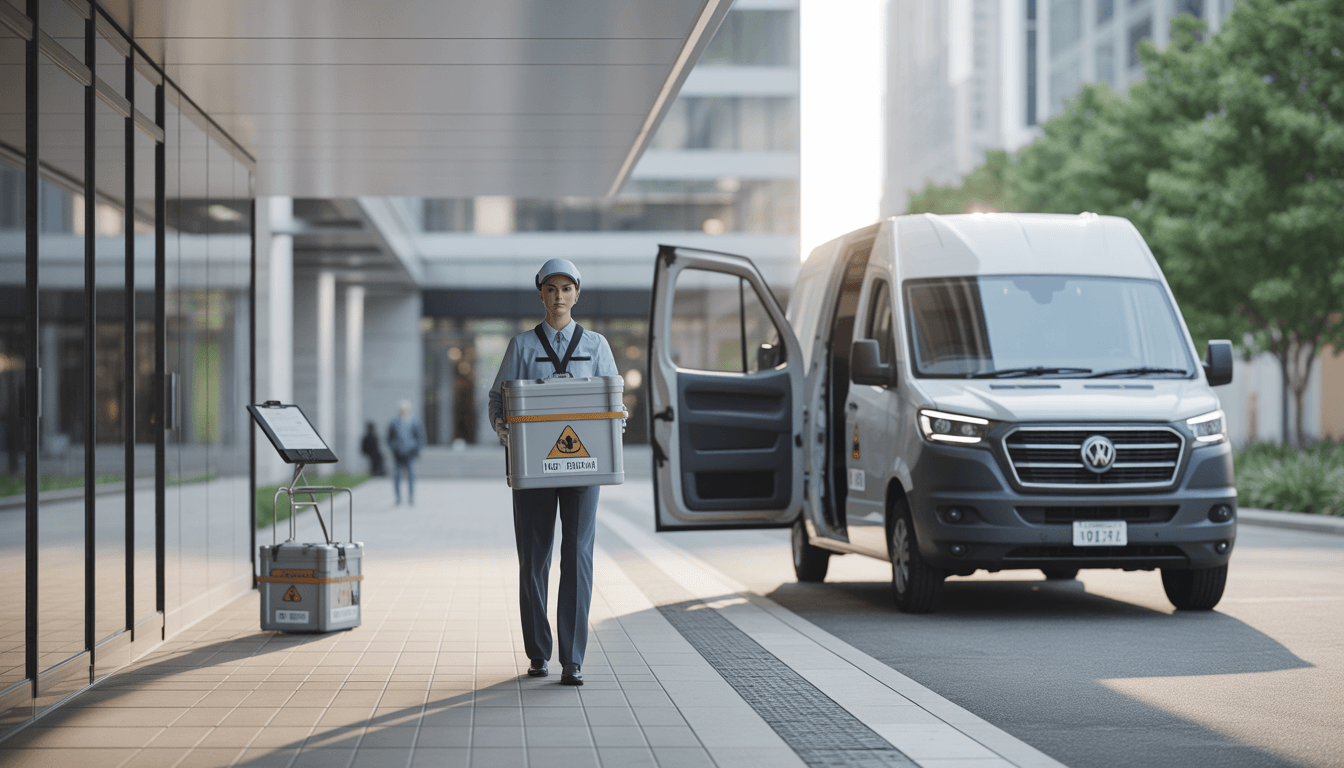
When you think about patient privacy, you probably picture a doctor whispering in an exam room or a secure server storing digital records. You probably don’t picture a delivery driver in a branded polo shirt handing over a brown paper bag.
But here is the reality: Medical couriers are the invisible backbone of healthcare.
We move the blood samples, the X-rays, the trial medications, and the wheelchairs. In doing so, we handle “Protected Health Information” (PHI) constantly. It might be a name on a vial, an address on a box, or a prescription label.
If that information gets leaked, lost, or stolen, the consequences are catastrophic—not just for the patient, but for your business.
In this article, we’re going to peel back the seal on HIPAA compliance. Why does it matter so much for couriers? What happens if you mess up? And how do you build a business that healthcare providers can actually trust?
Let’s dive in.
What Exactly is a HIPAA-Compliant Medical Courier? (And Why Aren’t All Couriers?)
First, let’s clear up a massive misconception.
Just because a driver owns a car and has a “Medical Delivery” sticker on the window does not make them HIPAA compliant. In fact, using a standard gig-economy driver (like an Uber or DoorDasher) for medical deliveries is a ticking time bomb for your liability.
A true HIPAA-compliant courier isn’t just moving a package from Point A to Point B. They are acting as a Business Associate (BA) . Under the HIPAA Omnibus Rule, a courier is a direct extension of the hospital or lab.
This means the courier has a legal, signed Business Associate Agreement (BAA) that holds them accountable. This document isn’t just a handshake; it’s a binding contract that says, “If you lose this blood sample or someone sees this patient’s name, you are legally on the hook.”
The “BAA” is Your Golden Ticket
If you are a healthcare provider shopping for a courier, do not even look at their price list until you have seen their BAA.
- What it is: A legal document defining the courier’s responsibilities.
- Why it matters: Without it, your healthcare organization is solely responsible for any breach caused by the courier. With it, liability is shared.
For couriers, having a solid BAA shows you are a professional, not a fly-by-night operation.
What Happens When Compliance Fails? (The Horror Stories)
You might be thinking, “It’s just a delivery. How bad can it be?”
Very bad.
Let’s look at the three major risks of ignoring HIPAA in logistics:
1. The Financial Ruin (Tiered Penalties)
The Department of Health and Human Services (HHS) doesn’t mess around. If a courier leaves a box of medical records in an unlocked car and they get stolen, that is a breach.
- Tier 1 (Unknowing): $100 to $50,000 per violation.
- Tier 4 (Willful Neglect): $50,000 per violation, up to $1.5 million per year.
If you lose 10 vials of blood with patient labels? That could be 10 separate violations.
2. Jail Time
Yes, you read that right. While most HIPAA violations result in fines, if a courier knowingly obtains or discloses PHI for a malicious reason (like selling patient lists or snooping on a celebrity’s medical file), the criminal penalties include fines up to $250,000 and 10 years in federal prison.
3. Reputational Death
For a hospital or lab, a data breach destroys patient trust. Once a breach hits the news because a driver messed up, that healthcare provider will drop your contract immediately. You will never work in that town again.
The Three Pillars: Administrative, Physical, and Technical Safeguards
So, how do we prevent this? HIPAA compliance for couriers isn’t magic; it breaks down into three specific pillars you can implement today.
Administrative Safeguards (The Paperwork)
This is the “boring” stuff that saves your bacon.
- Training: Every single driver must complete annual HIPAA training. They need to know what PHI is and how to spot it.
- Background Checks: You can’t hire someone with a history of theft or fraud to handle sensitive medical data.
- Incident Response: You need a plan. What happens if the van breaks down? Who do you call if a package is opened?
Physical Safeguards (The Hands-On)
This is where the rubber meets the road.
- Lock and Key: Vehicles used for medical transport should be locked at all times when unattended. PHI should never be left in a car overnight.
- Opaque Packaging: This is a huge one. You cannot walk into a coffee shop holding a vial with a patient’s full name and DOB visible. Everything must be sealed in opaque, tamper-evident bags.
- Chain of Custody: You need an electronic trail. Who picked it up? What time? What was the temperature? Who signed for it?
Technical Safeguards (The Digital Side)
In 2025, you can’t just rely on paper logs.
- Encryption: If you use a tablet or phone for routing, and it contains patient info, that device must be encrypted.
- Secure Tracking: Real-time GPS tracking isn’t just for customer service; it’s a security feature to ensure the package is on the right route.
Temperature Control: The Silent Compliance Issue
Here is a twist most people don’t think about.
HIPAA isn’t just about privacy; it’s about data integrity. A lab result is only valid if the specimen wasn’t spoiled.
If a courier fails to maintain “cold chain” logistics (keeping a vaccine or blood sample between 2°C and 8°C), the sample degrades. The lab runs a test on bad data. The doctor makes a wrong diagnosis. That is a compliance failure.
A HIPAA-compliant courier must have:
- Validated coolers and temperature monitors.
- Real-time temperature alerts.
- Drivers trained to “swap out” ice packs or plug in units.
If the temperature goes out of range, the shipment is technically “dead,” and the courier is liable for the cost of the redraw and the missed diagnosis.
What to Look For in a Medical Courier Partner
If you run a hospital, pharmacy, or lab, use this checklist before you hire a courier:
- Do they sign a BAA? If the answer is no, hang up the phone.
- Do they screen their drivers? Ask about background checks and drug testing.
- How do they track chain of custody? Do they have an app or just a clipboard?
- Do they train for biohazards? Handling blood and tissue requires OSHA training, not just HIPAA training.
The Bottom Line: It’s About Humanity
We can talk about fines and jail time all day, but the real reason HIPAA matters is the patient on the other end of that delivery.
That blood sample might be for a cancer diagnosis. That prescription might be for a heart condition. That medical equipment might be the only way a grandparent can get home from the hospital.
When a courier respects HIPAA, they aren’t just following rules. They are protecting someone’s dignity.
In the world of healthcare logistics, compliance isn’t a barrier to entry; it’s a competitive advantage. By investing in training, secure vehicles, and watertight agreements, you aren’t just moving boxes—you are building trust.
Conclusion
HIPAA compliance for medical couriers is non-negotiable. It protects patients from embarrassment and harm, and it protects your business from financial ruin and legal action. As healthcare moves more into the home—delivering medications and devices directly to patients—the role of the courier as a “Business Associate” becomes even more critical.
Don’t view compliance as a hassle. View it as the standard that separates the professionals from the amateurs. Lock the doors, cover the labels, and train your team. Because in this business, what you don’t know can hurt you.